

Ever watched your dog race around the garden, ears flapping, paws skidding, pure joy on their face? That’s the dream, isn’t it? However, the reality can be muddy patches, worn lawns, and the odd “What did you just eat?” moment.
You want a stunning outdoor space, but your furry friend needs a garden that’s safe, comfortable, and made just for them.
So, what’s the best surface for dogs in the garden? Many dog owners explore options like real grass, artificial turf, pavers, and bark mulch when designing a garden for their pets.
Finding the right balance between an attractive garden and a space that keeps dogs happy and healthy is key.
Let’s dive in, answer your burning questions, and help you create a dog-friendly garden that’s both practical and a joy to look at.
The best surface for dogs in your garden depends on your dog’s needs, your garden style, and your maintenance preferences.
You can combine surfaces to suit both you and your dog. The trick is knowing what’s safe, practical, and enjoyable for both of you. Read on for details, expert tips, and real-life garden ideas.
When designing a dog-friendly garden, it helps to consider the garden from a dog’s perspective. Dogs love to explore, sniff, run, and relax in different areas, but they can also be tough on garden surfaces.
Key questions for any dog owner:
The perfect dog-friendly garden balances your needs with theirs. You want a landscape that looks beautiful, resists wear and tear, and keeps your furry friend safe and happy.
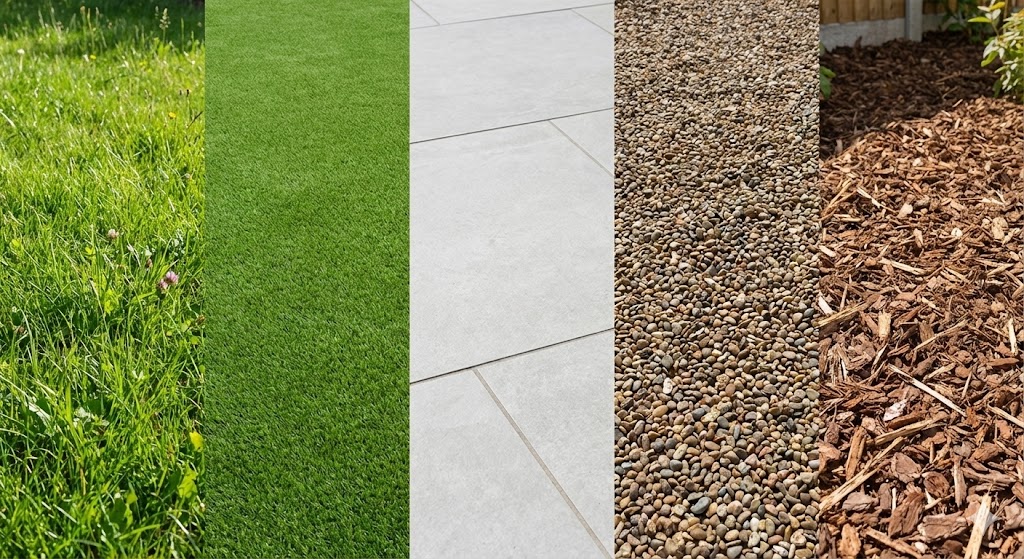
It’s easy to get overwhelmed with garden ideas. Let’s break down the best surfaces for dogs, what works, and what to avoid.
A real lawn is the gold standard for many. Dogs love the feel of grass under their paws, and it’s gentle on joints. But maintaining a healthy lawn with dogs requires patience.
Pros:
Cons:
Tip: Select a resilient grass variety and train your dog to use a designated spot for toileting. Water the area after use to minimise damage from urine. Consider setting aside time for regular lawn patching to maintain its appearance and comfort.
Artificial grass for dogs has changed the game. No mud, no mowing, and it stays green all year. My friends with big, energetic dogs swear by it.
Pros:
Cons:
Consider installing artificial grass for a tidy, low-maintenance patio. Pair it with raised beds and potted plants to create a lush, dog-friendly garden that both you and your dog will enjoy.
Porcelain paving is an excellent choice for modern gardens. It’s a non-slip surface, resists wear and tear, and is easy to keep clean. If you want a hard surface that stands up to everything, this is it.
Pros:
Cons:
Porcelain paving works well for walkways and patios, keeping paws comfortable and preventing muddy footprints indoors. Mixing paving with other surfaces adds comfort and visual interest.
Gravel can be useful in areas where you want good drainage. But not all gravel is safe for dogs. Choose rounded, pea-sized stones. Sharp or large stones can hurt paws and get stuck.
Pros:
Cons:
Use gravel for paths or an area for your dog to toilet. It’s important to monitor dogs around gravel to prevent ingestion. For dogs that tend to eat everything, it’s best to avoid gravel altogether.
Bark mulch feels good underfoot and blends into most gardens. But not all mulch is safe for dogs. Avoid cocoa mulch, as it’s toxic to dogs. Cedar and pine mulches are better options.
Pros:
Cons:
Try cedar mulch around shrubs and shaded spots for a fresh, natural look. Many dogs ignore cedar mulch, but always check that your chosen mulch is labelled as pet-safe.
Every garden design needs a personal touch. To keep your garden both safe for your dog and attractive for yourself, consider these practical strategies.
A secure fence is the first step in any pet-friendly garden. If your dog is a jumper, install a fence that is high enough to prevent escapes and ensure there are no gaps underneath.
A sturdy fence keeps your dog away from roads, neighbours, and harmful plants. It gives you peace of mind, and your dog freedom to play in the garden.
Dogs need shade as much as we do. Plant fast-growing shrubs and small trees to create natural shade, and use sail shades in open areas to keep your dog cool.
Nothing beats watching your dog nap in a patch of dappled sunlight, safe and content.
Your garden ideas should include dog-friendly plants. Some common garden favourites, like lilies and foxgloves, are toxic to dogs. Always check before planting.
Dog-friendly plants and flowers to try:
Plants to avoid: azaleas, yew, daffodils, and tulips. These are harmful to dogs if chewed or ingested.
Create and keep a list of plants to avoid in your shed or greenhouse. This helps make sure your garden remains a safe, enjoyable space for your dog.
The best dog-friendly garden uses a mix of surfaces and features. Here are my top tips for creating a safe and enjoyable outdoor space:
Your garden should be a haven for you and your dog. With a little planning, you’ll both enjoy the garden every day.
What is the safest surface for dogs in the garden?
Artificial turf, porcelain paving, and well-chosen mulch (like cedar) are all safe for dogs when installed correctly. Always avoid surfaces or mulches that may be harmful to dogs if ingested.
Can I use gravel in my garden with dogs?
Yes, but only rounded, pea gravel. Never use sharp or large stones. Always supervise to make sure your dog doesn’t eat them.
How do I protect my lawn from dog urine?
Train your dog to use a specific area, water the spot afterwards, and use a robust grass mix.
What plants are safe for dogs?
Sunflower, rosemary, and hebe are safe. Always check for non-toxic plants before planting.
How can I make my garden dog-proof?
Secure fences, use safe plants, and design play and rest zones. Make sure your garden safe by regularly checking for gaps, harmful plants, and garden hazards.
Nothing beats seeing your dog leap onto the lawn, roll in the grass, or nap in the shade of a sunflower. The best surface for dogs in your garden is one that fits both your lifestyle and theirs.
Mixing surfaces is key: real grass for comfort, porcelain paving for easy-to-clean paths, and pet-safe mulch or gravel for variety. Safe, non-toxic plants, sturdy fences, and a thoughtful garden design will keep your furry friend happy, healthy, and ready for adventure.
Make your garden a true outdoor living area: Fun, safe, and beautiful for everyone. That’s what a perfect dog-friendly garden is all about.
TL;DR:
Keep your furry friend happy, and you’ll both enjoy the garden for years to come.