

A dog crate might look simple, but for me and millions of dog owners, it’s a game changer.
Whether you’re welcoming a new puppy or hoping to crate train an anxious rescue, the right crate can bring structure, security, and peace of mind for both you and your dog.
A dog crate is a secure, enclosed space designed for dogs to rest, travel, or spend short periods of time safely. When used correctly, a dog crate helps dogs feel protected and can support house training, behaviour shaping, and even recovery after surgery. Crates are not cages or punishments, they are a safe space, much like a den, where your dog can relax and feel at home.
TL;DR: A dog crate is a tool for training and safety, offering your dog comfort and structure when you can’t supervise every moment.
Crates aren’t just for puppies, though many people first use them when bringing home a new dog. Concerns about chewed shoes, accidents, and sleepless nights can be addressed with the help of a dog crate, which often becomes an essential tool for pet owners.
A crate could:
I’ve seen many dogs, across different sizes and breeds, settle faster and thrive with crate training. A crate for your dog is not a cage; it’s a home within your home.
If you’re a dog owner, you know keeping your pup safe and happy is a top priority. A crate is best for managing confinement in a gentle, positive way.
Dogs feel more secure when they have a familiar place to retreat, especially during stressful moments like thunderstorms or fireworks.
Choosing the right crate types can feel overwhelming. I’ve tried nearly every option raising dogs as both a pet parent and a volunteer with rescue groups. Every dog or puppy crate has pros and cons, so let’s break it down.
1. Wire Crates:
Wire crates are strong, foldable, and allow good airflow. Many dogs like being able to see out, and you can add bedding for extra comfort. They’re easy to clean and come in different sizes.
2. Plastic Crates:
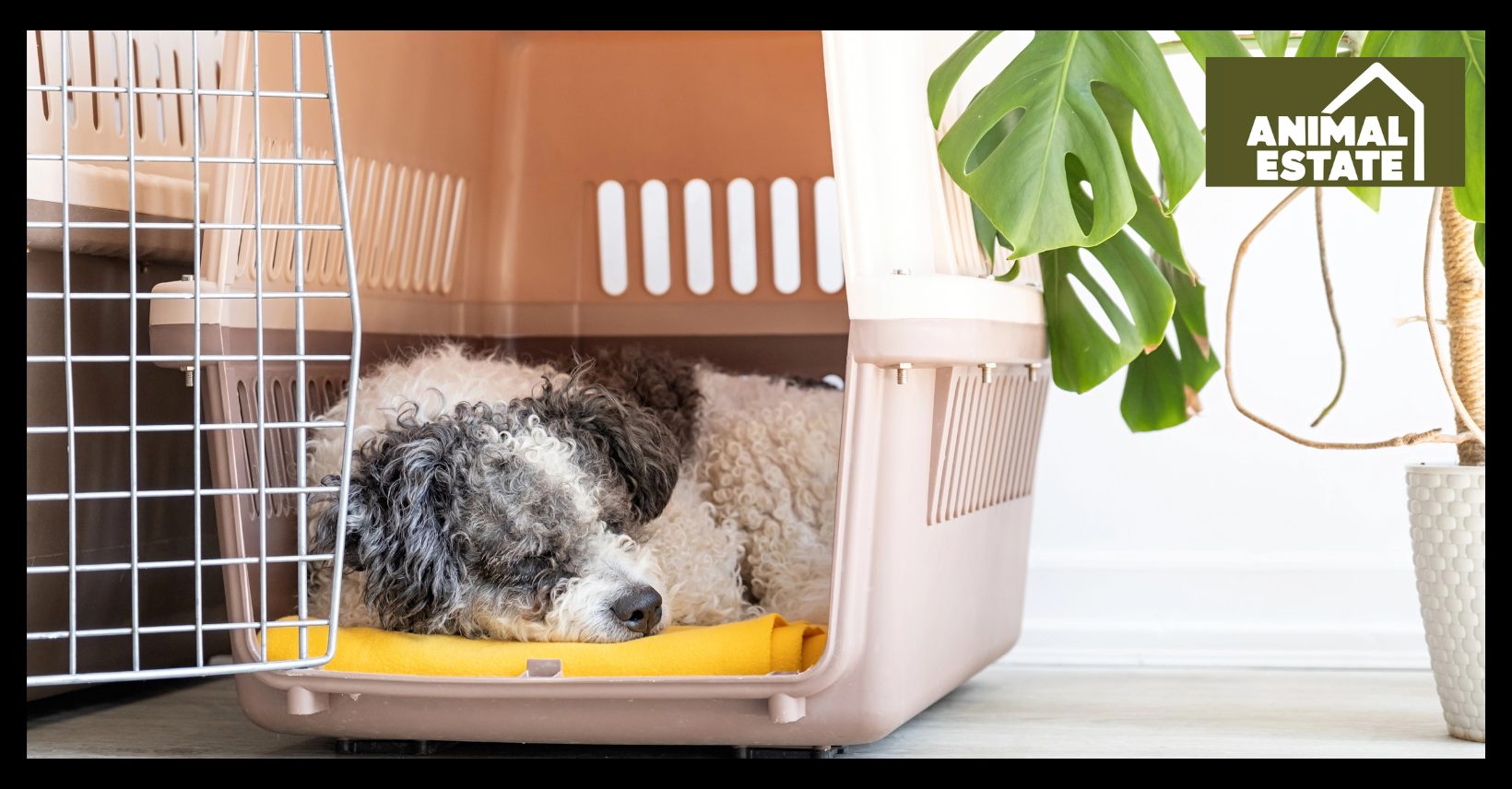
Plastic crates are lightweight, cosier, and often used for travel. They provide more privacy, which some nervous pups prefer.
3. Soft-Sided Crates:
Soft-sided crates are collapsible and easy to carry, but best for calm dogs who won’t chew or scratch. They’re ideal for trips or as a bed at night.
4. Playpens:
A playpen is not a crate, but sometimes people use one for puppies to give them a bit more room to play safely.
Crates are made in different sizes to suit every dog, from tiny pups to giant breeds.
The crate should be big enough for your dog to stand, turn around, and lay down comfortably, but not so large they use one end as a toilet!
Crate types to consider:
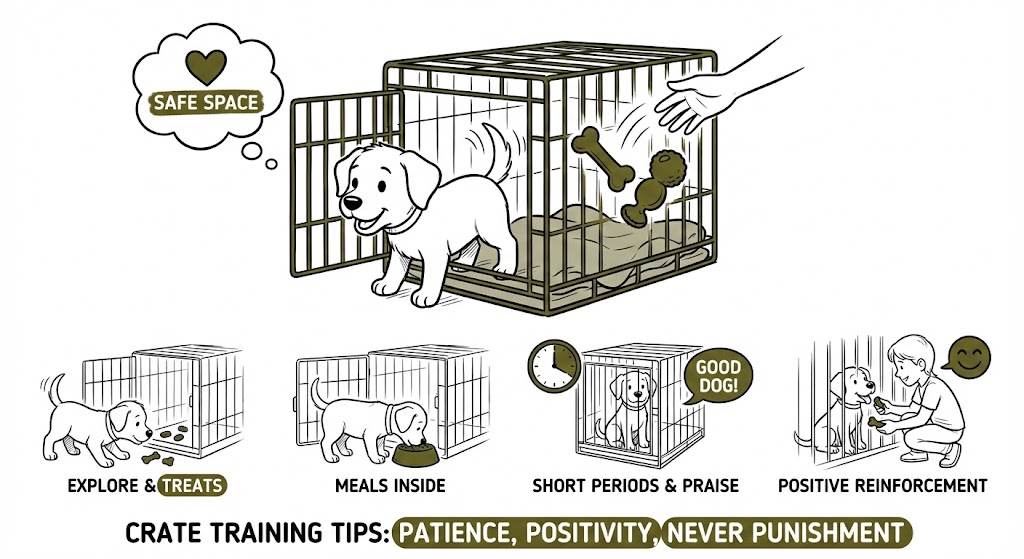
Crate training a dog or puppy requires patience and positive reinforcement. It’s helpful to start slowly and remain consistent throughout the process. With these approaches, most puppies will come to appreciate having their own den-like space.
Here’s how to crate train a puppy:
A crate is a safe space when introduced with kindness and patience. Many dogs end up loving their crate and will choose to rest there even when the door is open.
Dogs must never spend all day in a crate. Giving your dog enough exercise and attention is essential.
You want a crate that’s just right. Not too big, not too small.
The dog should be able to:
If you have a puppy, you might get a crate with a divider so you can adjust the space as they grow. This helps with house training and stops them from using one end as a toilet.
Look for features like:
Never use a crate as a substitute for attention, training, or supervision.
Measure your dog from nose to tail and add a few inches. The crate should be big enough so your dog can stand, turn around, and stretch out. For a new puppy, use a divider or start with a smaller crate.
Each dog needs their own crate. Sharing can cause stress or fights.
Yes, when you supervise and use positive reinforcement. Puppies see their crate as a den – a cosy, safe space to rest and recharge.
Choose bedding that’s soft but washable. Some dogs chew, so avoid anything they could swallow. For anxious pups, a blanket that smells like you can help.
Yes, vets often recommend a crate for short periods after surgery to prevent injury. Always follow your vet’s advice.
A crate is a safe, familiar spot that helps dogs feel secure, much like a child’s bedroom. Crates offer structure and peace of mind for you and your dog, whether you’re house training, travelling, or just giving your dog a place to relax.
Used correctly, a dog crate builds trust and confidence, not fear. As a dog owner, I’ve seen how a crate could change a dog’s life for the better. It’s not about confinement or “locking up” your best friend. It’s about giving them the safety and structure they crave.
If you’re thinking, “Should I get a crate for my dog?” – my answer is yes. Choose the right crate types, introduce it gently, and use positive reinforcement. Your dog will thank you, and you’ll find life with your pup calmer and happier.
Remember: Crates aren’t cages. They’re a gift of comfort, safety, and trust. If you ever feel unsure about crate training, reach out to a dog trainer or your vet for advice tailored to your breed and lifestyle.