

If you want your dog kennel to last, you need the right foundation. People talk a lot about dog kennel flooring ideas, but the base is where everything starts.
The kennel base keeps your dog safe, clean, and comfortable. We at Animal Estate sell large outdoor dog kennels and accessories all across the UK. We’ve seen every type of base used, and I know what works best.
The best base for a dog kennel is a level, poured concrete slab. Concrete is strong, waterproof, easy to clean, and lasts for decades. It keeps the kennel floor stable and dry. Other options like high-density plastic panels or raised kennel decking work for temporary or portable kennels, but concrete is the best choice for permanent outdoor dog kennels.
If you want a base that stays put, keeps the kennel clean, and stands up to British weather, concrete is the clear winner.
A good kennel base does more than hold up your dog kennel. It affects safety, cleanliness, and your dog’s health.
The right base keeps your dog dry, protects against digging, and makes cleaning easy. A poor base can lead to rot, mud, odours, or escapes.
I’ve seen pet owners struggle with the wrong option. Wooden frames rot. Gravel shifts and gets messy. Thin mats wear out. If you want your kennel to last, invest in a solid base.
A strong, easy to clean kennel base saves you time and trouble down the road.
Let’s break down the most common bases for dog kennels and see how they stack up.
A poured concrete base is the top choice for permanent outdoor dog kennels. Here’s why:
A concrete base is the best choice for kennel floor stability, safety, and hygiene. If you want to keep your dog healthy and your kennel area dry, nothing beats concrete.
Personal tip: I always recommend sealing concrete with epoxy resin or a pet-safe coating. This makes it even easier to clean and keeps odours away.
If you want something portable or temporary, high-density plastic panels with interlocking panels can work. These are lightweight, easy to install, and ideal for rental properties.
Plastic panels are a good kennel base for short-term setups, but may not be the best for large or very active dogs.
Plastic is a great option for pet owners who move kennels around or want a base that’s easy to install.
Raised floor systems lift the kennel off the ground. This keeps your dog dry and improves airflow.
Raised floor systems are best for outdoor kennels in damp or muddy gardens.
Gravel bases are common in DIY outdoor kennels and runs. It drains well but has big drawbacks.
Gravel may not be the best for large or escape-prone dogs.
If you choose gravel, add a border to keep the stones in place and lay weed matting underneath the kennel.
Some pet owners use paving stones or flagstones for a solid kennel base.
Pavers are a base option for garden kennels where appearance matters.
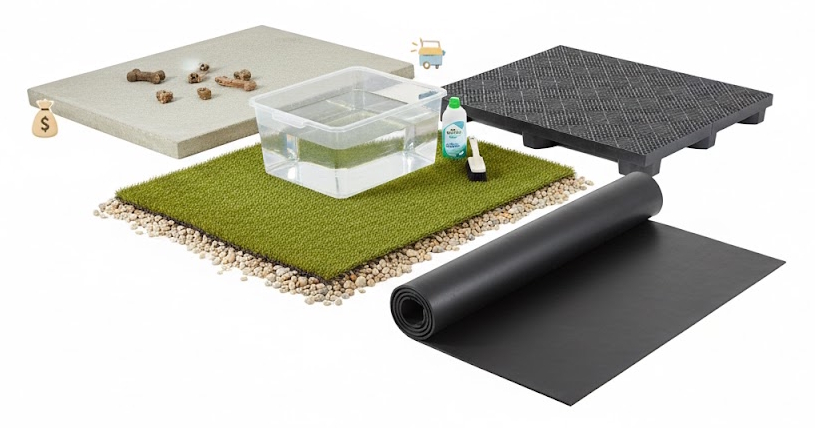
Picking a base is about more than just price. Here’s what I consider when helping customers choose the right kennel base:
Always tailor your kennel base to your dog’s needs and your garden’s conditions. One size never fits all.
If you answer these questions, you’ll find the best choice for your dog kennel.
Want to build your own kennel base? Here’s the process I follow for a concrete base:
A well-built kennel base lasts a lifetime and makes cleaning a breeze.
Here’s a quick comparison to help you find the best base for your needs:
| Base Type | Pros | Cons |
| Concrete | Strong, waterproof, easy to clean, chew-proof | Heavy, costly upfront, permanent |
| High-density plastic | Portable, easy to clean, light | Less durable, not chew-proof, can flex |
| Raised kennel decking | Dry, good airflow, comfortable | Needs maintenance, can rot if wood |
| Gravel | Drains well, affordable | Hard to clean, easy to dig, can get messy |
| Pavers/flagstones | Durable, attractive | Heavy, gaps trap dirt, not always level |
The best kennel flooring ideas always start with a solid base.
Once your base is set, you can choose the top layer, the dog kennel flooring. This is where you get creative with kennel flooring options like:
But remember, the right base is what keeps your flooring system working well. The flooring for your dog kennel only performs as well as the base underneath it.
No matter which kennel base type you pick, here are tips to keep your kennel area clean and safe:
Regular cleaning and quick repairs mean your kennel stays safe and your dog stays healthy.
If you avoid these mistakes, you’ll have a kennel base that stands the test of time.
Hundreds of pet owners have faced the challenge of finding the right base for their dog kennel. The most important point? Cutting corners on the base rarely pays off in the long run.
While it might be tempting to choose a cheaper or quicker solution, this often leads to more repairs, hassle, and costs in the future.
Whether the base is concrete, plastic, or decking, taking the time to do it properly from the start makes all the difference.
Dogs love a kennel that’s dry, warm, and safe. The base is the first step to keeping your dog happy and healthy.
Yes, for most permanent kennels, concrete is the best choice for dog kennel bases. It’s waterproof, chew-proof, and easy to clean. Just be sure to add a drain and slope for drainage.
Gravel works, but it’s not always the best option for kennel base. It’s affordable and drains well, but dogs can dig through it, and it’s hard to keep clean.
If your garden is wet or your dog likes to dig, a raised floor is an excellent solution. It keeps the kennel area dry and your dog off the cold ground.
Rubber flooring and epoxy flooring are the most popular choices. Both are easy to clean and safe for paws. The flooring you choose should complement your base.
A good kennel base means a safe, clean, and happy dog for years to come.
Ready to build or upgrade your kennel? Have questions about your own kennel base needs? Reach out to us at Animal Estate. We’re here to help you choose the right base for any dog kennel.